Vibe coding is undoubtedly the most significant tech term of recent years . Chosen as the word of the year 2025 by the Collins dictionary , it refers to a new way of creating software: instead of writing code line by line, you describe what you want in natural language and artificial intelligence takes care of the rest.
By 2026, thousands of people will be using vibe coding to build SaaS applications and tools, sometimes in just a few hours. But have you ever tried scaling an AI-generated application ? Beyond the initial magic , project leaders quickly hit a wall: invisible technical debt , security vulnerabilities , and the inability to scale.
In this comprehensive guide , we explain everything: what vibe coding is , how it works , the tools used , and above all, at what precise moment it becomes urgent to hand over to real developers for the rest of your project.
1. Definition: What is vibe coding?
Vibe coding is a software development approach that uses artificial intelligence to generate code from natural language descriptions.
The fundamental principle
Vibe coding is based on a simple idea: focusing on the "what" rather than the "how" . You describe the desired result, and the AI takes care of the technical implementation. This is a complete reversal of how software has been developed for years.

2. The history of vibe coding: from Karpathy to today
February 2025: the founding tweet
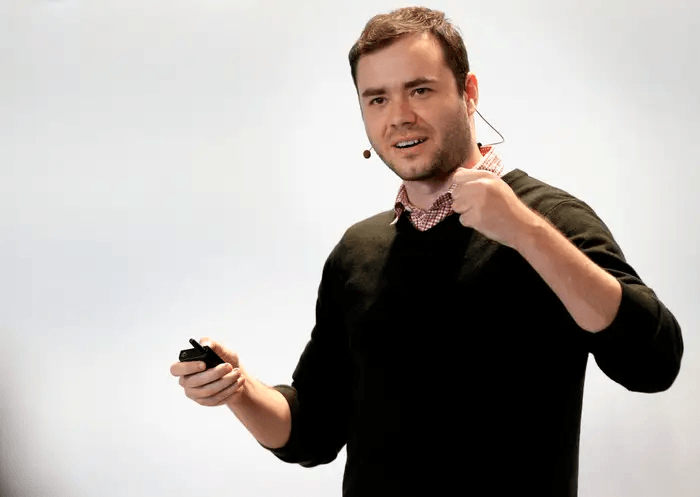
The term "vibe coding" was coined by Andrej Karpathy , co-founder of OpenAI and former head of AI at Tesla , in a tweet that went viral in February 2025 :
"There's a new kind of coding I call 'vibe coding', where you fully give in to the vibes, embrace exponentials, and forget that the code even exists."
To translate the general idea into French, it goes something like this: "There is a new way of programming that I call 'vibe coding', where you let yourself be completely guided by intuition, where you embrace exponential progress, and where you even forget the existence of code itself."
Karpathy described his own experience: he used AI tools to build personal projects by " accepting everything " that the AI proposed, without really reading the code . If it worked, that was enough.
2025: The explosion
The concept struck a chord. In just a few months :
- Thousands of non-developers have started creating applications with tools like Bolt, Lovable, and Replit.
- The term has been adopted by the entire industry : Google, IBM, and Cloudflare use it in their official communications.
- Collins Dictionary has named it word of the year 2025
- Startups have been launched with products entirely " vibe-coded ".
2026: Maturity
In early 2026 , Karpathy himself further developed the concept . He now distinguishes between two levels : Vibe coding and agentic engineering . Agentic engineering represents the mature version of vibe coding : the developer no longer codes line by line, but acts as an architect who guides autonomous AI agents. They break down problems, define constraints, and validate the results.
3. How does it work in practice?
The typical vibe coding workflow
- Describe : You describe your project in natural language. For example: "I want a landing page with a contact form and a modern dark design."
- Generate : The AI generates the complete code, including HTML, CSS, JavaScript, backend, and database.
- Test : You test the result live thanks to an instant preview in your browser.
- Iterate : You describe the desired changes. For example: "Change the button color to purple and add a scrolling animation."
- Deploy : You publish everything in one click and get an online URL, ready to be shared.
What AI can do today
By 2026, vibe coding tools will be able to generate:
- Complete user interfaces (React, Next.js, HTML/CSS)
- APIs and backends (Node.js, Python, databases)
- Authentication systems (login, registration, OAuth)
- Third-party service integrations (Stripe, SendGrid, Supabase)
- Mobile applications (React Native, Flutter)
- Landing pages and showcase websites
What AI can't (do well)
- A scalable architecture designed for thousands of users
- Robust security including encryption , granular permission management , and GDPR compliance
- Automated testing and continuous integration/continuous delivery (CI/CD) pipelines
- Precise optimization of performance at scale
- Maintenance and long-term technical developments
4. The advantages of vibe coding
Unprecedented speed of development
This is the main advantage . What used to take weeks can now be done in a few hours . A functional MVP, including an interface, a database, and an authentication system, can be built over a weekend .
Reduced costs (at startup)
It's no longer necessary to hire a full development team just to validate an idea. With a simple monthly subscription of a few dozen euros, an entrepreneur can create a working prototype and test their market immediately.
Accessible to non-developers
This approach completely democratizes software creation. Designers, marketers, and project leaders can now transform their ideas into concrete products without needing to learn a single programming language.
ultra-fast iteration
You test an idea , discard it if it doesn't work , and then test a new one in minutes instead of days. This speed of iteration becomes a major competitive advantage for young startups in their launch phase.

5. Limitations and risks to be aware of
Vibe coding is n't a magic bullet . Here are the real problems we see at Arkone when we take over projects that were originally "vibe-coded" :
Technical debt is accumulating silently
The AI-generated code works, but it's not always well-structured . The AI duplicates code , does n't follow good architectural practices , and doesn't consider maintainability . As a result, after a few weeks of iterations, the project becomes a tangled mess that's impossible to maintain.
Security breaches are frequent.
According to several studies, LLMs introduce security vulnerabilities in approximately 45% of cases. SQL injections, XSS vulnerabilities, hard-coded API keys, lack of input validation… AI code is not audited by default . The concrete risks:
- User data exposed (GDPR not respected)
- API keys and secrets visible in the source code
- No encryption of sensitive data
- Unverified dependencies (supply chain risk)
The "wall" of scaling
A prototype that works for 10 users doesn't necessarily work for 10,000 . AI doesn't consider:
- Load balancing
- Database query optimization
- The caching
- Automated testing
- Supervision and monitoring
The paradox of understanding
The more you delegate to AI , the less you understand your own code . If a bug occurs in production at 3 a.m., you can't fix it if you don't understand how the code works.
No documentation, no tests
The coded Vibe code is rarely accompanied by:
- Unit and integration testing
- Technical documentation
- CI/CD (Continuous Integration and Continuous Deployment) Pipeline
- Environment management (dev, staging, production)

6. Vibe Coding vs. Professional Development
Here is an honest comparison:
| Critère | Vibe Coding | Développement Pro |
|---|---|---|
| Vitesse | Très rapide (heures/jours) | Plus lent (semaines/mois) |
| Coût initial | Très faible (0-50€/mois) | Élevé (5K-100K€) |
| Qualité du code | Variable, souvent médiocre | Structuré, testé, documenté |
| Sécurité | Failles fréquentes | Audité, conforme RGPD |
| Scalabilité | Limité à quelques utilisateurs | Conçu pour grandir |
| Maintenance | Difficile, dette technique | Maintenable sur le long terme |
| Coût de la maintenance | Très élevé | Faible |
| Pour qui ? | Prototypes, MVPs, POCs | Produits en production |
The reality of the market in 2026
What we observe at Arkone is a natural pipeline:
Phase 1: Vibe Coding (Euphoria)
The Vibe entrepreneur codes an MVP and tests their idea with real users. Cost: €0 to €200/month.
Phase 2: The Wall (Disillusionment)
The product works , the first customers arrive ... but the code breaks . Repeated bugs , slowness , security flaws . The entrepreneur can no longer move forward alone.
Phase 3: Transition to Agency (Maturity)
Arkone's intervention : audit of existing code , refactoring (or rewriting), implementation of a scalable architecture , security, and testing. The prototype becomes a real professional software .
That's exactly what we do at Arkone . We take coded vibe projects and transform them into scalable, secure, and maintainable products.
Frequently Asked Questions (FAQ)
How long does it take to create an application using vibe coding?
The main advantage of vibe coding is its speed. A functional prototype (MVP) including an interface, a database, and a connection system can be built in a weekend, whereas traditional development would take several weeks.
Do you need technical skills to get started?
No, that's precisely the point of this method. Vibe coding is based on natural language. You describe the result you want to achieve (the "what"), and the AI takes care of writing the complex code to implement it (the "how"). It's a very accessible approach for entrepreneurs, designers, or marketers.
Can a coded Vibe application support thousands of users?
This is one of the major limitations of this method. An AI-generated prototype will work perfectly well for your first 10 or 50 users. However, AI doesn't natively design scalable architectures (load management, request optimization, caching). To scale up, a complete overhaul of the architecture is usually unavoidable.
What do you mean by "technical debt" related to AI?
AI tends to generate code that works initially, but is often duplicated and poorly structured. By repeatedly requesting rapid modifications over several weeks, the project becomes a tangled mess, impossible to read or maintain. This is what's known as technical debt: a short-term time saving that comes at a very high price in the long run.
When should I use an agency like Arkone?
The ideal time is as soon as your product finds its market. If your coded Vibe MVP attracts its first real users but starts accumulating bugs, slowdowns, or if it becomes impossible to add new features without breaking everything, then you've reached the limits of AI. It's at this precise moment that you need to consolidate the code with a professional team.
Have you vibe-coded your project? Let's make it scalable.
At Arkone , we support entrepreneurs and startups who have vibe-coded their MVP and need to take it to the next level:
- Technical audit of your existing code
- Identification of security vulnerabilities and technical debt
- Migration plan to a scalable architecture
- 100% French development, zero outsourcing
- More than 100 projects delivered in 5 years (Coca-Cola, WorldSkills, Quick…)
Contact us to learn more and to have your project audited.