Custom web development or generic solution: why is AI changing the game?
For a long time, the choice seemed quite simple.
On one side, there were generic solutions : quick to implement, often cheaper to start up, already tested by thousands of users.
On the other hand, there was custom web development : more tailored, more flexible, closer to the business, but often perceived as longer, more expensive and riskier.
Then artificial intelligence arrived and changed part of the equation.
Today, AI accelerates certain stages of design, development, documentation, testing, and maintenance. It allows for faster creation , easier prototyping , and reduced costs .
But it does not replace expertise . On the contrary, it makes professionalism even more important.
Because a project generated too quickly, without a framework, without a solid architecture and without a long-term vision, can very quickly become difficult to maintain .
AI makes custom development more accessible. But it doesn't make creating good software any easier.
That's the whole nuance.

Before AI: customization was often reserved for the most strategic projects
For years, many companies have chosen a generic solution for pragmatic reasons.
Not because the tool perfectly met their needs, but because it was available immediately .
A SaaS, a subscription, a few adjustments, a quick training session, and the project could start.
This was often the right choice for standard needs :
- manage tasks;
- send emails;
- follow contacts;
- create invoices;
- arrange appointments;
- centralize documents;
- follow a simple activity.
Custom development , on the other hand, was generally reserved for specific or strategic projects:
- business software;
- a customer platform;
- a complex back office;
- a mobile application;
- a structuring internal tool;
- a system connected to several existing software programs.
The reasoning was understandable: if the tool truly needs to adapt to the company's operations , then a custom solution is worth considering. Otherwise, it's better to use an existing tool.
But today, this boundary is less clear.
What AI really changes
Artificial intelligence does not eliminate the constraints of web development.
It doesn't automatically transform an idea into a reliable, secure, and maintainable product. But it speeds up many things .
It can help to:
- generate interface components;
- write functions;
- produce a first version of a screen;
- documenting code;
- create tests;
- analyze an existing project;
- refactor certain parts;
- explore several technical solutions;
- to quickly prototype an idea.
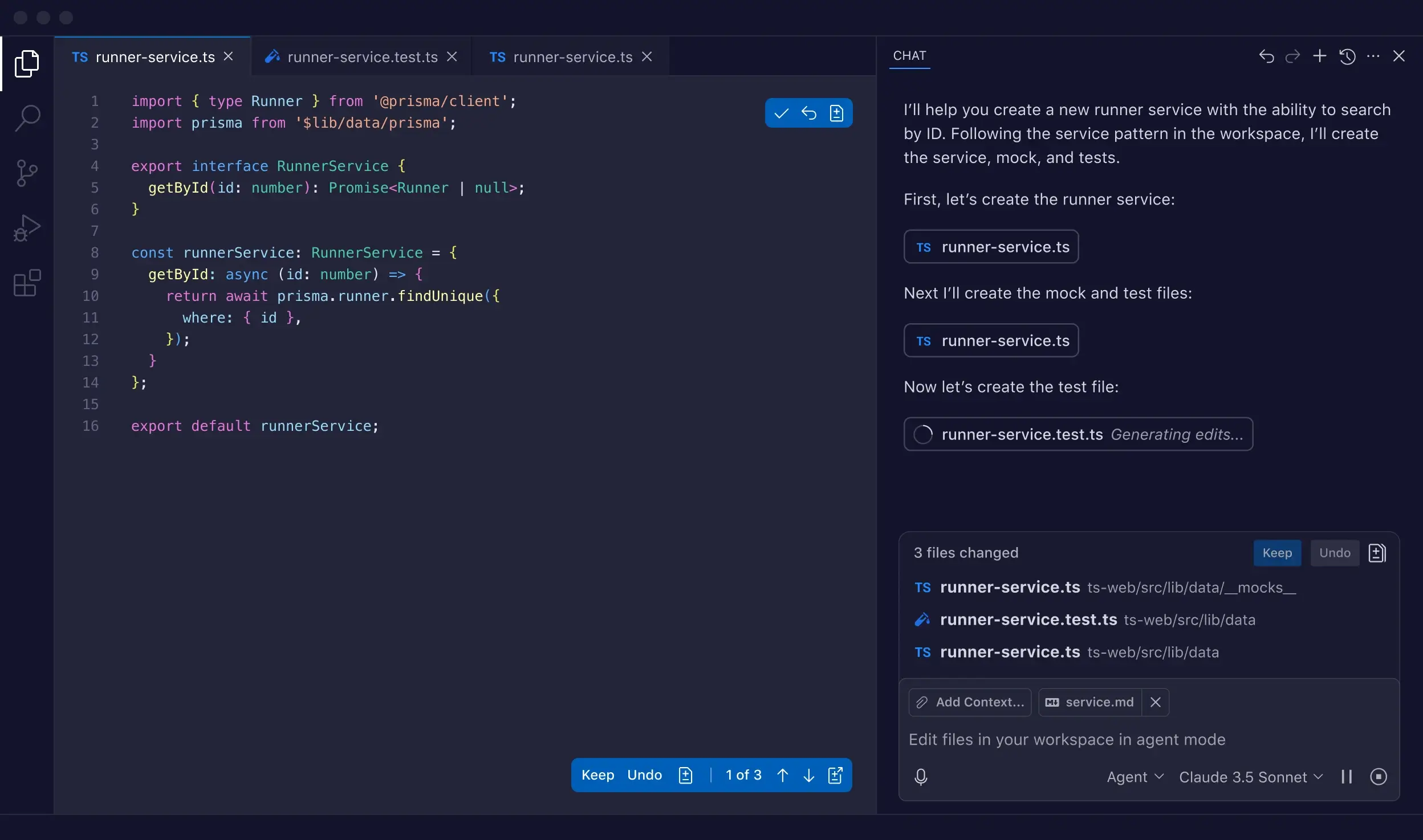
For a web agency, AI therefore becomes an accelerator. It does not replace the developer , it increases their production capacity .
The profession is evolving: developers no longer spend all their time writing each line of code by hand. They must also know how to use tools, delegate certain tasks, proofread, correct, arbitrate , and maintain a global view of the project.
This is a significant change in approach.
Previously, developers were primarily code craftsmen. Today, they are also becoming architects, conductors, and quality controllers of what AI can produce.
And that's precisely where experience makes the difference.
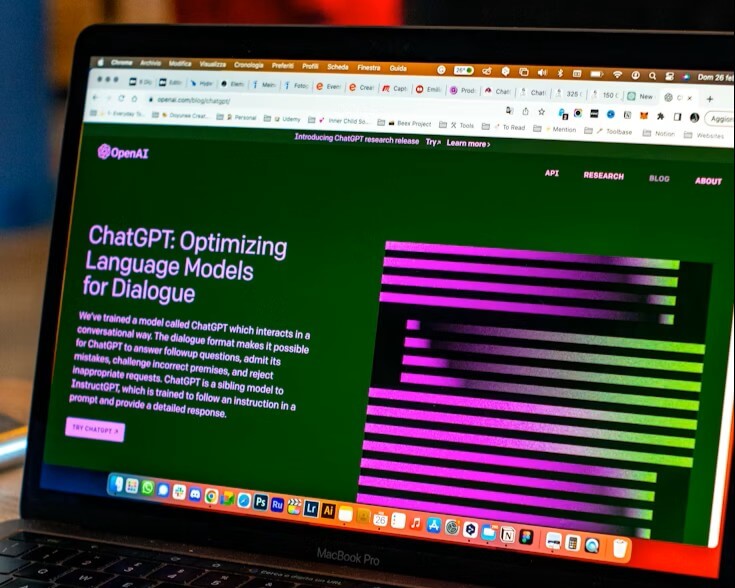
Faster, customized development than before
One of the first visible effects of AI is speed .
Some tasks that used to take several hours can be accelerated. Some initial versions can be produced more quickly. Some technical explorations can be carried out more easily.
This does not mean that a serious project becomes instantaneous. On the contrary:
- You always have to understand the need.
- The project must always be framed.
- You always have to design the right routes.
- You should always test.
- Security must always be ensured.
- It is always necessary to maintain.
But it would be absurd to deny that AI changes the speed of execution .
A well-managed custom web project can now progress faster than before , particularly on the initial technical building blocks, interfaces, prototypes, tests and documentation.
This is good news for businesses.
Because this makes certain bespoke projects more accessible, more progressive and sometimes less intimidating than they were a few years ago.
Prices that change with new tools
While some steps are faster, costs may also change.
AI does not miraculously reduce all budgets by a factor of ten. A true web project always requires time, expertise, communication, testing, corrections, and real technical responsibility.
But it can reduce the time spent on certain repetitive or technical tasks.
As a result, custom development can become more competitive .
Previously, many companies chose a generic solution because custom solutions seemed too expensive, too time-consuming, or too demanding.
Today, the gap still exists, but it is less obvious in some cases. Especially when considering total cost .
A generic solution may seem cheaper at first, but it can also involve:
- recurring subscriptions;
- premium options;
- paid connectors;
- functional limits;
- fees per user;
- external automation;
- manual exports;
- time wasted trying to work around the tool.
Conversely, a tailor-made solution often represents a larger initial investment , but it can precisely meet the need, reduce unnecessary handling and save time on a daily basis .
The right question, therefore, is not simply:
How much does the tool cost?
The real question is:
How much does it cost today to not have a truly suitable tool?

The trap: believing that AI alone is enough to create good software
This is probably the most important point. Artificial intelligence can produce code . A lot of code. Very quickly. Sometimes even code that seems to work.
But producing code is not enough to create good software , a good website, or a good mobile application.
A successful project must be conceived as a whole :
- architecture ;
- database;
- security ;
- performance ;
- maintainability;
- user experience;
- access rights;
- code quality;
- scalability;
- backups;
- accommodation;
- documentation;
- tests;
- monitoring;
- compliance ;
- integrations with other tools.
AI can help with each of these issues. But it should not bear sole responsibility for the project .
Without an experienced developer behind it, it can generate a solution that appears to work, but quickly becomes fragile.
A demo can be convincing. A prototype can give the impression that everything is almost finished. An interface can look clean.
Then come the real users, the real volumes of data, the real special cases, the real requests for changes, the real security problems and the real bugs that are difficult to reproduce.
And that's where the difference between a DIY project and a professional project becomes obvious.
The real challenge: making the right technical choices
A good web project does not depend solely on the quality of the code line by line.
It depends primarily on the choices made at the outset .
- Which database should be used?
- Which architectural style should I choose?
- How to structure data models?
- How to manage roles and permissions?
- How to predict the increase in workload?
- How to organize the backend?
- How to connect existing tools?
- How to avoid excessive technical debt?
- How can we make the project maintainable by other developers?
These choices are never neutral .
An architecture suitable for a prototype will not necessarily be suitable for a platform intended to last for several years.
A database that is perfect for a small internal tool can become limiting if the volume of queries increases significantly.
A simple structure at the start can become unmanageable if the business model evolves.
AI can suggest options. It can compare technologies. It can explain advantages and disadvantages.
But she does not naturally know the real context of the company , its constraints, its priorities, its users, its business objectives and its growth prospects.
This is where human experience remains indispensable.
A serious agency doesn't choose a technology because it's trendy. It chooses it because it meets the needs, budget, team, level of complexity, and expected lifespan of the project.
AI speeds up execution.
It does not replace a judgment.
The new risk: unmaintainable AI projects
Since the arrival of generative AI tools, more and more projects are being created very quickly.
This is an interesting development. It allows entrepreneurs, managers, project leaders, or business teams to test an idea without waiting months :
- Create an interface;
- Connecting a database;
- Add some features;
- Publish a first version;
- To show something concrete.
But this speed also creates a new problem .
Some projects work well enough to be showcased, but not well enough to be industrialized :
- The code can become confusing;
- The data may be poorly organized;
- Business rules can be scattered;
- Performance may be unstable;
- Security may be insufficient;
- Bugs can become difficult to fix.
This is particularly the risk of certain projects stemming from “vibe coding” , where an application is built by guiding AI through successive intentions, without always controlling the overall architecture, the scalability of the product , refactoring or the structure of the project.
This approach can be very useful for exploring an idea. However, it quickly shows its limitations when it comes to making the product reliable, secure, maintained, and scalable .
This is why taking over AI projects, abandoned prototypes, or projects developed without a proper structure is becoming an important issue. The goal isn't necessarily to throw everything away.
First, we need to audit the existing situation , understand what works, identify what can be preserved, pinpoint the fragile areas, and then gradually restructure what needs to be restructured.
Custom-made products retain their main advantage: adaptability.
Even with AI, the main advantage of custom development remains the same: it takes the form of your project .
A generic solution often imposes its framework: its menus, modules, rules, limitations, internal logic, and way of thinking about the business. The company must then adapt its processes to the tool .
Custom development does the opposite. It starts with the business , the users, the constraints, the data and the objectives to build a suitable tool.
This is particularly important when a company has:
- specific processes;
- specific customer journeys;
- complex management rules;
- several tools to connect;
- a business logic that is difficult to standardize;
- an internal organization that doesn't easily fit into the categories of a SaaS.
With AI, this advantage becomes even more interesting .
If custom development becomes faster and more accessible, then it becomes less obvious to accept the constraints of a generic tool when it only meets part of the need.
Many companies end up paying for a SaaS of which they use only a small part of the features, while adapting their way of working to the limitations of the tool.
AI makes another path more realistic: building a more targeted, more tailored solution, closer to the ground.
Generic solutions retain genuine qualities.
We shouldn't caricature generic solutions. They still have many advantages :
- They are quick to deploy;
- They are often well documented;
- They are regularly updated;
- They meet standard needs well;
- They also incorporate artificial intelligence features.
For some projects, they remain the best choice . If the need is simple, conventional, not very strategic, or even vague, a generic solution may be much more reasonable.
We can draw a parallel with furniture. If you need a simple, readily available, and affordable piece of furniture, an Ikea piece might be perfectly adequate. But it will get the job done:
- It will not be unique;
- It won't fit your room exactly;
- It will not meet all your preferences.
On the other hand, if you have an unusual room, specific constraints, a particular use, or strong aesthetic requirements, custom-made furniture makes perfect sense. But it still needs to be made by someone skilled.
A poorly made custom piece of furniture will always be inferior to a decent standard one. The same is true for web development: a bad custom development can be more problematic than a good generic solution .
The question is therefore not simply:
“Custom-made or generic?”
The real question is:
“Does the need justify a specific tool, and are the right people in place to build it?”

Why some advantages of generic solutions diminish with AI
Historically, generic solutions had three major advantages:
- Speed;
- The price;
- Reliability.
They allowed for the rapid launch of a tool, with a limited budget, by leveraging a product already used by other companies. These advantages still exist, but they are less absolute than before .
The speed of custom development has progressed thanks to AI: the cost of certain steps has decreased, development tools are more powerful, frameworks are more mature, integrations are simpler, and prototypes can be made much faster.
As a result, choosing a generic solution is no longer as straightforward as it once was , especially when the need is specific. Many companies realize they are paying for unnecessary features, having to work around the limitations of SaaS, depending on a vendor's roadmap, and adapting their way of working to a tool that wasn't designed for them.
In this context, bespoke tailoring is once again becoming a very serious option for:
- business tools;
- customer platforms;
- internal back offices;
- specific web applications;
- mobile applications;
- collaborative portals;
- solutions that directly contribute to the company's value.
AI makes customization more accessible, but not simpler.
This is the central nuance: AI makes custom development more accessible .
- It speeds up certain tasks;
- It reduces certain costs;
- It facilitates prototyping;
- It helps teams move faster.
But it doesn't make creating good software any easier . On the contrary, it can give the illusion that everything is easy.
While the real difficulty often lies elsewhere:
- in the structure;
- in consistency;
- in security;
- in scalability;
- in business understanding;
- in the quality of the technical choices;
- in the ability to sustain the project over time.
A successful web project is not just about the ability to produce code. It's about the ability to build a useful, reliable, maintainable tool that aligns with the company's objectives .
This is precisely where a serious web agency retains its full value.

So, should we choose a custom-made solution or a generic one?
The answer depends on the need.
A generic solution remains relevant if the need is standard, simple, quick to cover and not very strategic .
Custom development becomes interesting when the tool touches on the core business, internal productivity, customer experience, data, or commercial differentiation .
To decide, you need to ask yourself a few simple questions:
- Does the tool need to adapt to our actual way of working?
- Are we already spending time working around the limitations of existing software?
- Do our teams do a lot of repetitive manual tasks?
- Is our need specific to our profession?
- Can this tool improve our customer experience?
- Do we want to maintain control over the evolution of our solution?
- Does the project have real strategic value?
If the answer is no, a generic solution may very well suffice.
If the answer is yes, then customization is probably worth considering.

Conclusion: AI does not replace customization, it transforms it
Artificial intelligence does not spell the end of custom web development. It transforms the rules .
It makes certain projects faster, more accessible, and more efficient. It reduces some of the gap with generic solutions. It allows companies to more easily consider tools tailored to their specific business rather than limiting themselves to standardized software.
But it also increases the need for professionalism. The easier it becomes to generate code, the more important it becomes to know what to build, why to build it, and how to structure it correctly .
Generic solutions remain useful for standard, simple, or non-strategic needs. However, as soon as a tool touches on the core business, customer experience, internal performance, or commercial differentiation, custom development becomes a particularly attractive option .
AI does not replace expertise.
It rewards teams that are able to use it intelligently.
At Arkone , we support companies in their custom web projects with a real audit, understanding and scoping phase.
The objective is simple: to build together a clear set of specifications, then to support you from A to Z in the design, development and evolution of your solution.
We also work on taking over abandoned projects, old projects or projects resulting from a vibe coding approach, in order to audit the existing system, make the technical foundations reliable and transform a fragile prototype into a usable, maintainable and sustainable solution.