Will artificial intelligence replace developers ? Kill WordPress ? Standardize the web to the point of draining it of its substance? We hear all sorts of conflicting opinions.
To separate fact from fiction , the Yucatan agency's Rencontres podcast brought together the two co-founders of Arkone , a Parisian web and mobile agency, for a frank conversation about what AI is transforming — or not — in the design, development and visibility of websites.

Arkone, putting people first
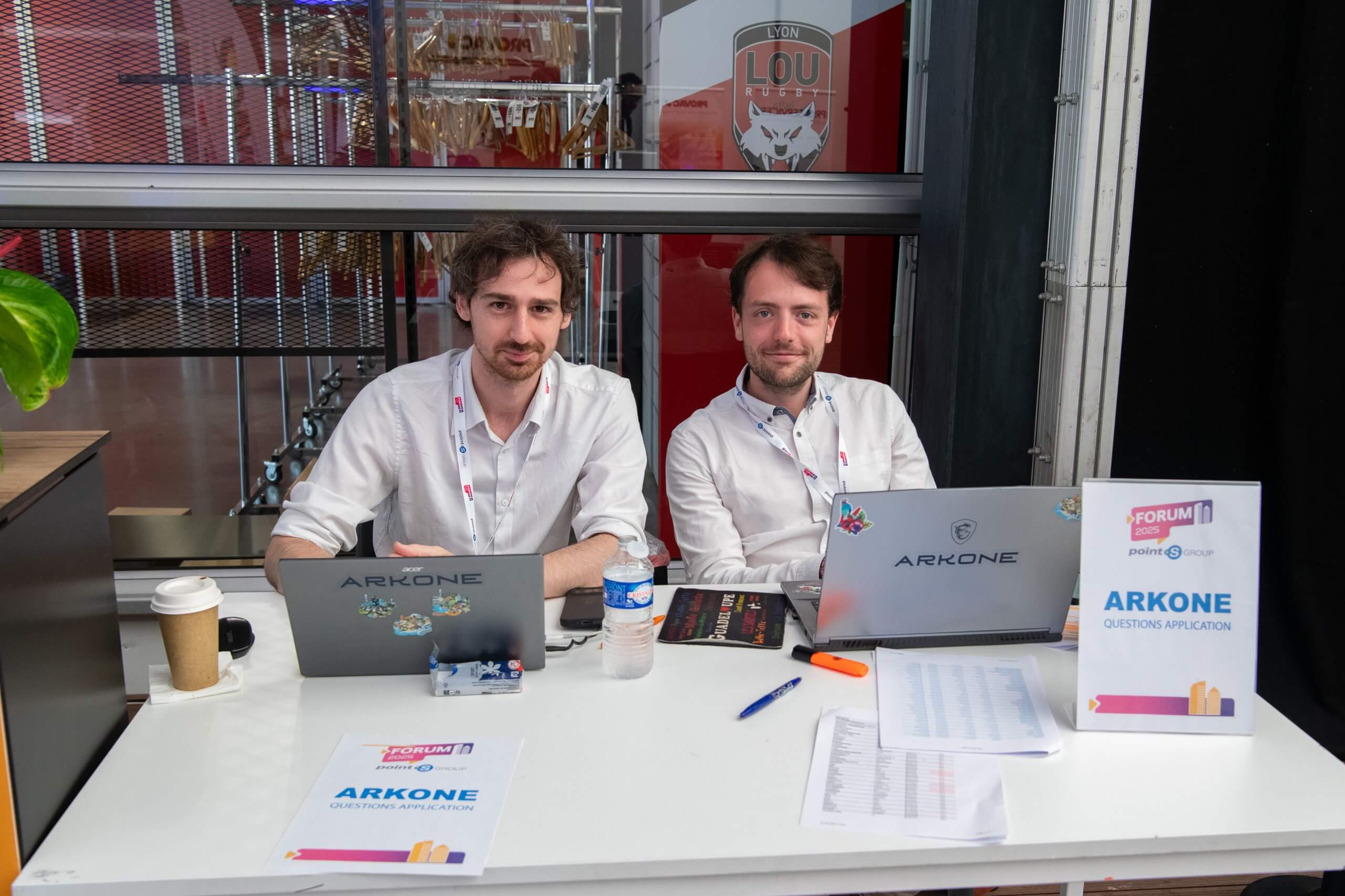
Before getting to the heart of the matter, a word about the agency. Arkone is a small, four-person team that prides itself on a deeply human approach. Almost everything is developed in-house, and each client receives comprehensive support from start to finish: from initial specifications to hosting, including development, SEO, and maintenance.
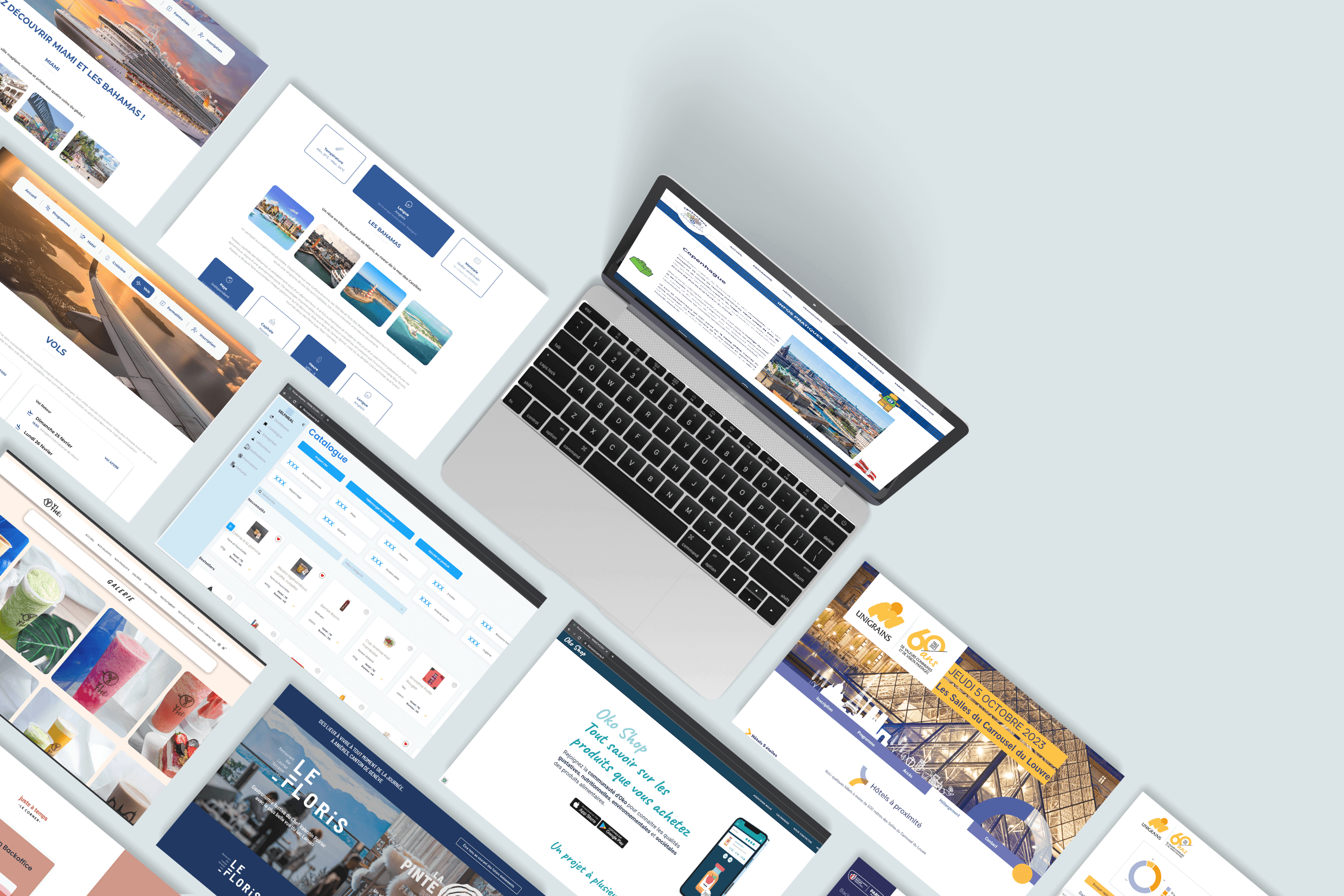
The agency also makes a strong commitment: 100% French . Developers, designers, freelancers—all are recruited in France, both for the quality of their work and to ensure seamless communication, eliminating information loss due to language barriers. And contrary to popular belief, showcase websites represent only a tiny fraction of their business: Arkone focuses primarily on mobile and business applications, with careful consideration of client needs from the outset.
From developer to project manager
Sébastien and Valentin's observation is unequivocal: since September 2023, the job has completely changed. It has gone from a highly technical task—writing the code yourself—to a role more akin to that of a project manager leading an AI.
But be warned: this doesn't mean the profession has become less demanding; quite the opposite. The focus has shifted upstream. Preparing the code structure, writing the right prompt based on the client's request, knowing how to precisely articulate what you want: these are the new key skills. As Sébastien, an AI, aptly summarizes, "You have to talk to it a bit like you would to a five-year-old." You can't just say, "You know what I mean."
Technical control remains essential to verify the quality of the product code.
"Develop me a website": the limits of magic
Can we really ask an AI to create a website from scratch? Yes… in theory. But the results need to be qualified. Arkone regularly takes over projects “in the second phase”: clients who had launched a website themselves with AI, which worked very well, until the day everything started malfunctioning without any apparent explanation.
The problem? Code that is often unreadable and impossible to maintain. Sébastien compares AI to a junior developer just starting out: without a structure imposed from the outset, it produces "unmanageable" code that ultimately leads the project to disaster. AI can create good prototypes, but without a solid development foundation, the result doesn't hold up over time.
The end of WordPress?
For fifteen years, WordPress reigned supreme among CMSs. Today, its future is more uncertain. The famous CMS offered ease of use, but also its share of constraints: it was impossible to develop custom features without using plugins, which quickly became very complicated.
However, AI now offers the same speed as WordPress, without the constraints, and with the quality of customization. According to the two founders, traditional templates are "somewhat obsolete" in the face of this new flexibility. WordPress isn't destined to disappear, but it has good reason to be concerned about a portion of its market.

SEO, GEO: Visibility is changing the rules
A beautiful website that no one can find is useless. And here too, the rules are evolving rapidly. We've been talking about SEO for years; now we talk about GEO (Generative Engine Optimization), optimization for generative search engines.
The difference is significant. Traditional SEO relied on a highly technical approach: tags, meta descriptions, and keywords placed in the right places. Search engines based on LLM (Learning Link Management), however, expect something else: context , expertise , in-depth content, and consistency across the entire site. Gone are the days of generic pages crammed with keywords. Instead, focus on precise answers, FAQs that provide context, and cited sources.
One image keeps recurring in the conversation: websites now need to be built as if they were designed for a visually impaired person . Users with low mental health (LMH) read the site much like a screen reader. Structure, readability, tags, and metadata therefore remain essential—even if their relative importance has decreased.
And what about SEO in all of this? It's not dead, far from it. The two approaches complement each other and, on the positive side, they both encourage websites to be more accessible.
Accessibility, the quiet winner
This is one of the most beneficial side effects of this evolution. Accessibility is almost never spontaneously requested by customers—the market isn't mature enough yet. But search engine optimization, whether SEO or GEO, forces websites to be accessible: contrasts checked, texts readable, nothing hidden.
For Valentin, this isn't an abstract concept: Arkone has a visually impaired client, and the team sees firsthand how a well-designed website impacts their access to information. Therefore, the need for businesses to be visible on AI platforms indirectly benefits all users.
Mobile first… or not
Should we always think "mobile first"? Not necessarily, says Arkone, which rejects dogma. It all depends on the sector and the actual use case.
For business platforms, data-rich intranets, or competitive intelligence tools, usage is almost exclusively on desktop computers—responsive design is sometimes completely irrelevant. Conversely, as soon as we enter the B2C market, mobile dominates: 60 to 70% of traffic, or even 80% for a restaurant website. This makes sense: people search for a restaurant on the go, or while relaxing on their sofa, rarely at their desk. In this case, mobile-first is always the order of the day.
On the AI side, the picture is mixed: it's quite good at producing visually appealing responsive designs, but less adept at structuring, optimizing loading speed, and maintaining clean code. This is where choosing the right technologies—for example, server-side rendering to deliver pre-built HTML and accelerate loading—makes all the difference. And these fundamental decisions are ones that AI cannot make on its own.
Several AIs are better than one
Another lesson from this episode: to work effectively, you need to combine AI tools . Each one has its strengths, each shines at a particular time, and one can even be used to structure a prompt intended for another. The recipe? Constant curiosity, a lot of monitoring, and a great deal of testing, because the ranking of the best tools is constantly changing.
Do we still need to learn to code?
Without hesitation: yes. Engineering schools aren't going anywhere. At Arkone, interns are even forbidden from using AI : they must first get their hands dirty, face the challenges, and understand the code. It's this experience that will later allow them to make the right strategic decisions—server or client, type of hosting, etc. Without this knowledge, you can't guide the AI, which will systematically take the fastest route, which is rarely the best for a given project.
Does AI pose a risk to the web?
That's the big question at the end. And the answer worries the two founders a little.
The first risk, already visible, is the industrialization of the web : a multitude of sites that all look alike, with a recognizable graphic and textual "style," and empty content because it's already been seen everywhere. AI doesn't create information, it recycles it. Many users don't even proofread their own posts.
The second risk is even more profound: that of AI self-sabotage . If future models are trained on data themselves generated by AI, we risk widespread repetition, a "monothink," a standardization of everything. A precedent already exists: the generated images had at one point all turned a yellowish tint, a sign of training on previous AI output. With text, the phenomenon would be more difficult to detect.
Faced with this, two scenarios for the web of tomorrow: on the one hand a generic and standardized web, on the other a more artisanal , deeper, more human web.
Conclusion: The human element as a differentiating factor
This is where Arkone 's true added value lies. Beyond the technical aspects, the agency's role is to remind the client that it's their expertise, their voice, that must be heard. AI can be used, but the human element must be maintained.
This exchange—questioning specifications, encouraging reflection, reworking texts to truly align with the client's objectives—will remain, according to Sébastien and Valentin, the differentiating factor that will ensure the agency's longevity. The conclusion can be summed up in a simple sentence: we need to communicate.
Find the full conversation in the episode of the podcast Rencontres , the podcast from the Yucatan agency.